
Controlling Program Flow in Python
Learn the basics of using conditional statements in Python with this beginner-friendly guide.
Hey future Python wizard, welcome to Python Help!
Today, we’re going to use conditional statements to control program flow in Python. Conditional statements are a powerful programming tool that allow you to execute different code based on different conditions. They’re essential for any Python programmer to master.
In this article, we’ll cover the basics of using conditional statements in Python, from simple “if” statements to more complex “else if” and “else” statements.
Using “If” Statements in Python
One common conditional statement in Python is the “if” statement. You can use an “if” statement to execute code if a certain condition is true. For example:
x = 5
if x > 0:
    print("x is positive")
In this example, we’ve defined a variable “x” and used an “if” statement to check if “x” is greater than 0. If “x” is greater than 0, the program will print “x is positive”.
Using “Else If” and “Else” Statements in Python
Another common conditional statement in Python is the “else if” statement, also known as the “elif” statement. You can use an “elif” statement to execute code if the previous “if” statement is false, but another condition is true. You can also use an “else” statement to execute code if none of the previous conditions are true. For example:
x = 0
if x > 0:
    print("x is positive")
elif x < 0:
    print("x is negative")
else:
    print("x is zero")
In this example, we’ve defined a variable “x” and used an “if”, “elif”, and “else” statement to check if “x” is positive, negative, or zero.
Conclusion
To sum it up, conditional statements are a fundamental aspect of programming in Python. With the ability to execute different code based on different conditions, you can create powerful and flexible programs. By understanding and mastering the basics of conditional statements, you’ll be well on your way to becoming a proficient Python programmer. Thank you for reading, and stay tuned for more insightful articles on Python programming.
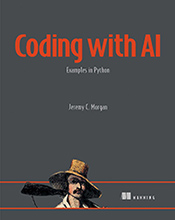
AI Is Changing Software Development. This Is How Pros Use It.
Written for working developers, Coding with AI goes beyond hype to show how AI fits into real production workflows. Learn how to integrate AI into Python projects, avoid hallucinations, refactor safely, generate tests and docs, and reclaim hours of development time—using techniques tested in real-world projects.