
Tackling the Basics
The ability to add all values in a list in Python is a fundamental aspect of programming. This tutorial will provide you with step-by-step instructions and detailed examples on how this can be achieve …
The ability to add all values in a list in Python is a fundamental aspect of programming. This tutorial will provide you with step-by-step instructions and detailed examples on how this can be achieved.
Python lists are very versatile data structures, allowing us to store multiple pieces of information under a single name. We can add all values in a list using built-in functions. Here’s an example:
my_list = [10,20,30,40]
total = sum(my_list)
print(total)
In the above code, sum() function is used to add all elements in the list. The result will be printed as output. We can also use a loop to iterate through the list and then accumulate its values:
my_list = [10,20,30,40]
total = 0
for num in my_list:
    total += num
print(total)
Both methods will yield the same result. It’s essential to know that when working with lists in Python, it’s always a good idea to use built-in functions because they are more optimized and reliable than manual loops.
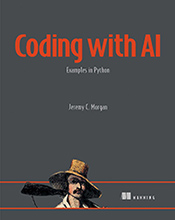
AI Is Changing Software Development. This Is How Pros Use It.
Written for working developers, Coding with AI goes beyond hype to show how AI fits into real production workflows. Learn how to integrate AI into Python projects, avoid hallucinations, refactor safely, generate tests and docs, and reclaim hours of development time—using techniques tested in real-world projects.