
The simplest way to verify whether a list is not empty or not
Python lists are an excellent tool that we can use in our code. When you want to ensure certain conditions, Python’s list methods allow us to quickly and easily check for different states of the list. …
Python lists are an excellent tool that we can use in our code. When you want to ensure certain conditions, Python’s list methods allow us to quickly and easily check for different states of the list.
Checking If a List Is Empty
The simplest way to verify whether a list is not empty or not in python is to use the built-in len() function. This function returns the number of items in the given iterable (list, tuple, string etc). If the length of the list is 0, it means that the list is empty.
Here’s how you can do this:
def check_empty(lst):
    if len(lst) == 0:
        return True # The list is empty
    else:
        return False # The list is not empty
This function will take a list as input and return True if the list is empty, otherwise it returns False. You can use this function to make sure you’re working with non-empty lists. For example, you could check if there are no more items left in your list after using a loop:
for item in my_list:
    # do something...
    if not check_empty(my_list):
        break
This code will break out of the loop as soon as my_list becomes empty. This is a common pattern for iterating over lists and then doing something when the list runs out of items.
Remember that checking whether an object is empty or not in python, generally refers to the concept of nullity. In this context, it means determining if the list contains any elements or not.
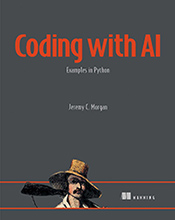
AI Is Changing Software Development. This Is How Pros Use It.
Written for working developers, Coding with AI goes beyond hype to show how AI fits into real production workflows. Learn how to integrate AI into Python projects, avoid hallucinations, refactor safely, generate tests and docs, and reclaim hours of development time—using techniques tested in real-world projects.