
The Importance of List Concatenation in Python
Understanding the importance of list concatenation in python allows you to build more complex, multi-step operations. You will learn about efficient use of memory by avoiding redundant lists and how t …
Understanding the importance of list concatenation in python allows you to build more complex, multi-step operations. You will learn about efficient use of memory by avoiding redundant lists and how to merge or combine two lists together into one larger list.
- List Concatenation in Python: The Basics
List concatenation in Python is a simple operation that merges two lists side-by-side. Here’s an example of it:
list1 = [1, 2, 3]
list2 = ['a', 'b', 'c']
merged_list = list1 + list2
print(merged_list) # Output: [1, 2, 3, 'a', 'b', 'c']
In the above code, we have two lists list1 and list2. We then use the + operator to concatenate these lists together into a new list named merged_list. This is done without creating any additional copies of either list. It’s important to note that lists in Python are immutable (i.e., you cannot change an existing list), so when we use += on a list, it really just creates a new list.
- Concatenating Multiple Lists: The
extend()Function
You can concatenate multiple lists at once using the extend function. This is particularly useful for large datasets or when you need to create lists dynamically based on conditions. Here’s how you might use it:
list1 = [1, 2, 3]
list2 = ['a', 'b', 'c']
list3 = ['x', 'y', 'z']
list1.extend(list2)
list1.extend(list3)
print(list1) # Output: [1, 2, 3, 'a', 'b', 'c', 'x', 'y', 'z']
The extend function adds all the elements from a provided list to the end of this list. This operation is done in-place (i.e., it changes the existing list), so no additional copies are created.
Remember, concatenating lists can be a very efficient way of combining multiple datasets into one large list when needed, allowing for more complex operations later on.
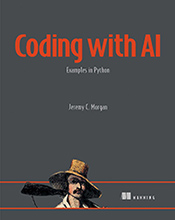
AI Is Changing Software Development. This Is How Pros Use It.
Written for working developers, Coding with AI goes beyond hype to show how AI fits into real production workflows. Learn how to integrate AI into Python projects, avoid hallucinations, refactor safely, generate tests and docs, and reclaim hours of development time—using techniques tested in real-world projects.