
Lists are the foundation of Python programming!
Lists, often referred to as one-dimensional arrays, have a lot of uses in Python. This includes storing multiple pieces of information under a single variable name. However, you can also have multiple …
Lists, often referred to as one-dimensional arrays, have a lot of uses in Python. This includes storing multiple pieces of information under a single variable name. However, you can also have multiple lists inside another list. That’s where ‘Lists of Lists’ come into play. Here’s a basic guide on creating and working with lists of lists in Python using Markdown format for clarity and simplicity.
To create a list of lists in Python, we use the following syntax:
list_of_lists = [[1,2,3], [4,5,6], [7,8,9]]
You can access items in this list using indices. Here’s how to do it:
print(list_of_lists[0])  # prints [1,2,3]
print(list_of_lists[0][1])  # prints 2
To append an item or a list to another list, you can use the append() method:
list_of_lists.append([10,11,12])
print(list_of_lists)  # prints [[1,2,3], [4,5,6], [7,8,9], [10,11,12]]
To remove an item or a list from the list of lists, you can use the remove() method:
list_of_lists.remove([4, 5, 6])
print(list_of_lists)  # prints [[1, 2, 3], [7, 8, 9], [10, 11, 12]]
You can also use list comprehension to create a new list from an existing one:
new_list = [item for sublist in list_of_lists for item in sublist]
print(new_list) # prints [1, 2, 3, 4, 5, 6, 7, 8, 9, 10, 11, 12]
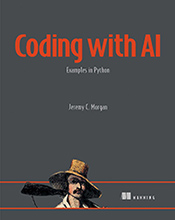
AI Is Changing Software Development. This Is How Pros Use It.
Written for working developers, Coding with AI goes beyond hype to show how AI fits into real production workflows. Learn how to integrate AI into Python projects, avoid hallucinations, refactor safely, generate tests and docs, and reclaim hours of development time—using techniques tested in real-world projects.