
Creating and Using Lists in Python
In programming, we often have data that we want to store together. If the data is numerical, it’s usually stored in lists in Python. …
In programming, we often have data that we want to store together. If the data is numerical, it’s usually stored in lists in Python.
In python, you can create an empty list by writing “list = []”. To add items to a list, you use “.append()” method. Here’s how:
# Creating an Empty List
numbers_list = []

# Adding Elements to the List
for i in range(10):
    numbers_list.append(i)

print(numbers_list)  # Output: [0, 1, 2, 3, 4, 5, 6, 7, 8, 9]
In the code above, we created an empty list and filled it with numbers from 0 to 9 by appending them one at a time.
Lists in Python can hold multiple data types, not just numbers. You can also use “.insert()” method to insert an item at a specific index. Here’s how:
# Creating an Empty List
letters_list = []

# Adding Elements to the List
for i in range(3):
    letters_list.append('a' + str(i))

# Inserting at a Specific Index
letters_list.insert(0, 'z')
print(letters_list)  # Output: ['z', 'a0', 'a1', 'a2']
In the code above, we created an empty list and filled it with letters from ‘a0’ to ‘a2’. We then inserted an element at index 0 using “.insert()” method.
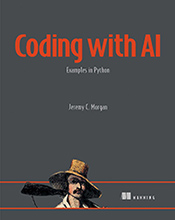
AI Is Changing Software Development. This Is How Pros Use It.
Written for working developers, Coding with AI goes beyond hype to show how AI fits into real production workflows. Learn how to integrate AI into Python projects, avoid hallucinations, refactor safely, generate tests and docs, and reclaim hours of development time—using techniques tested in real-world projects.