
Use the reduce() function for multiplication of all elements in a list.
The reduce() function in Python is a built-in function that applies a binary operator to an iterable (list, tuple etc.) in a cumulative way. We can use this function to multiply all elements of a list …
The reduce() function in Python is a built-in function that applies a binary operator to an iterable (list, tuple etc.) in a cumulative way. We can use this function to multiply all elements of a list.
- Import the Reduce Function
from functools import reduce - Define List and Apply Multiplication
numbers = [1, 2, 3, 4, 5] # Your list here
product = reduce((lambda x, y: x * y), numbers)
print(product)
In this code, the lambda function is used to define a multiplication operation and it’s applied to all elements of numbers in turn using the reduce() function. The result will be printed as the product of all elements in the list.
This solution works because the binary operator (*) is associative, meaning the order in which you perform operations does not affect the final result, and thus it can be applied cumulatively.
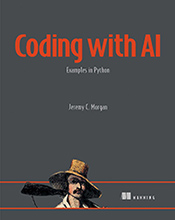
AI Is Changing Software Development. This Is How Pros Use It.
Written for working developers, Coding with AI goes beyond hype to show how AI fits into real production workflows. Learn how to integrate AI into Python projects, avoid hallucinations, refactor safely, generate tests and docs, and reclaim hours of development time—using techniques tested in real-world projects.