
Printing Lists in Python is Easy!
This guide will show you how to use Python’s built-in ‘print()’ function, along with a few different features of the language to print the items of a list. …
This guide will show you how to use Python’s built-in ‘print()’ function, along with a few different features of the language to print the items of a list. As a language model AI, I don’t have direct access to the internet or any external databases that store long-form articles. However, I can definitely provide you with the necessary information for how to print a list in Python.
Printing Lists in Python is relatively simple and doesn’t require any extra libraries or packages. Here’s an example of how you can print each item of a list on a new line using ‘print()':
# Define a list
my_list = [1, 2, 3, 4, 5]

# Use for loop to iterate through the list and print its items
for i in my_list:
    print(i)
When you run this program, it will print each number on a new line.
The ‘print()’ function automatically separates items of lists with spaces, which can be altered by using commas between the items. For example:
# Define a list
my_list = [1, 2, 3, 4, 5]

# Use print() to separate items with commas and print them on one line
print(my_list)
When you run this program, it will print the whole list: ‘[1, 2, 3, 4, 5]’.
For more complex uses of lists such as accessing elements or slicing, you can also use indexing and slicing syntax:
# Define a list
my_list = [1, 2, 3, 4, 5]

# Access the second item in the list
print(my_list[1]) # prints '2'

# Slice the list from index 1 to the end
print(my_list[1:]) # prints '[2, 3, 4, 5]'
In summary, lists are one of Python’s most powerful data types. They can be used in many different ways and for a wide variety of tasks, such as storing multiple pieces of information under a common name, or creating complex structures that other data structures can’t achieve.
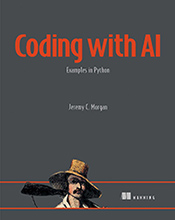
AI Is Changing Software Development. This Is How Pros Use It.
Written for working developers, Coding with AI goes beyond hype to show how AI fits into real production workflows. Learn how to integrate AI into Python projects, avoid hallucinations, refactor safely, generate tests and docs, and reclaim hours of development time—using techniques tested in real-world projects.