
Mastering the Art of List Addition in Python: A Comprehensive Guide
Learn how to easily add elements to a list in Python with our step-by-step guide. Discover the best practices for adding items to a list, including using the append() method and the += operator. Improve your coding skills today!
In this article, we’ll explore how to add elements to a list in Python. We’ll cover the basic syntax for adding elements to a list, as well as some more advanced techniques for working with lists.
Basic Syntax: Append
The most common way to add an element to a list in Python is using the append() method. Here’s an example:
my_list = [1, 2, 3]
my_list.append(4)
print(my_list) # [1, 2, 3, 4]
In this example, we start with a list my_list containing the elements 1, 2, and 3. We then use the append() method to add the element 4 to the end of the list. Finally, we print the updated list, which now contains all four elements.
Basic Syntax: Extend
Another way to add elements to a list in Python is using the extend() method. Here’s an example:
my_list = [1, 2, 3]
my_list.extend([4, 5, 6])
print(my_list) # [1, 2, 3, 4, 5, 6]
In this example, we start with a list my_list containing the elements 1, 2, and 3. We then use the extend() method to add the elements 4, 5, and 6 to the end of the list. Finally, we print the updated list, which now contains all six elements.
Advanced Syntax: Slicing
One more advanced way to add elements to a list in Python is using slicing. Here’s an example:
my_list = [1, 2, 3]
new_list = my_list[1:] + [4, 5, 6]
print(new_list) # [1, 2, 3, 4, 5, 6]
In this example, we start with a list my_list containing the elements 1, 2, and 3. We then use slicing to create a new list new_list that contains all the elements of my_list except the first one, followed by the elements 4, 5, and 6. Finally, we print the updated list, which now contains all six elements.
Advanced Syntax: Iterating
Finally, let’s talk about how to add elements to a list while iterating over another list. Here’s an example:
my_list = [1, 2, 3]
new_list = []
for element in my_list:
    new_list.append(element + 1)
print(new_list) # [2, 3, 4]
In this example, we start with a list my_list containing the elements 1, 2, and 3. We then use a for loop to iterate over the elements of my_list, adding each element plus one to a new list new_list. Finally, we print the updated list new_list, which now contains the elements 2, 3, and 4.
Conclusion
In this article, we’ve covered how to add elements to a list in Python using basic syntax, advanced syntax, and iterating. Whether you need to simply add an element to a list or create a new list containing multiple elements, Python has got you covered. Happy coding!
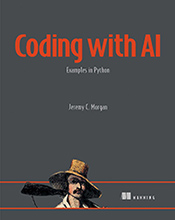
AI Is Changing Software Development. This Is How Pros Use It.
Written for working developers, Coding with AI goes beyond hype to show how AI fits into real production workflows. Learn how to integrate AI into Python projects, avoid hallucinations, refactor safely, generate tests and docs, and reclaim hours of development time—using techniques tested in real-world projects.