
Mastering the Art of Dictionaries: A Step-by-Step Guide to Creating and Using Dictionaries in Python
Learn how to create a dictionary in Python with ease! Our step-by-step guide covers the basics of dictionary syntax and shows you how to create and manipulate dictionaries like a pro. Get started now!
In this article, we will cover how to create a dictionary in Python, including the different ways to create one and some basic operations you can perform on it.
Creating a Dictionary
There are several ways to create a dictionary in Python:
1. Using the dict constructor
You can use the dict constructor to create an empty dictionary, like this:
my_dict = dict()
This will create an empty dictionary with no key-value pairs.
2. Using a list of tuples
You can also create a dictionary from a list of tuples, like this:
my_list = [('key1', 'value1'), ('key2', 'value2')]
my_dict = dict(my_list)
This will create a dictionary with the key-value pairs specified in the list.
3. Using the zip function
You can also create a dictionary from a list of tuples using the zip function, like this:
my_list = [('key1', 'value1'), ('key2', 'value2')]
my_dict = dict(zip(my_list[0], my_list[1]))
This will create a dictionary with the key-value pairs specified in the list.
4. Using the collections.defaultdict function
If you want to create a dictionary with default values, you can use the collections.defaultdict function, like this:
from collections import defaultdict
my_dict = defaultdict(int)
This will create an empty dictionary with default values of 0 for all keys.
Basic Operations
Once you have created a dictionary, there are several basic operations you can perform on it:
1. Accessing a value
You can access the value associated with a key using the [] operator, like this:
my_dict['key']
This will return the value associated with the key ‘key’.
2. Setting a value
You can set the value associated with a key using the = operator, like this:
my_dict['key'] = 'new_value'
This will update the value associated with the key ‘key’ to ‘new_value’.
3. Deleting a key-value pair
You can delete a key-value pair from a dictionary using the del operator, like this:
del my_dict['key']
This will remove the key-value pair associated with the key ‘key’ from the dictionary.
4. Iterating over key-value pairs
You can iterate over the key-value pairs in a dictionary using the items() method, like this:
for key, value in my_dict.items():
    print(f"{key}: {value}")
This will print each key-value pair in the dictionary, with the key followed by a colon and the value.
Conclusion
In this article, we have covered how to create a dictionary in Python and some basic operations you can perform on it. Dictionaries are a powerful data structure that can help you store and manipulate data in a flexible and efficient way. With these skills, you’ll be well-equipped to tackle a wide range of programming tasks.
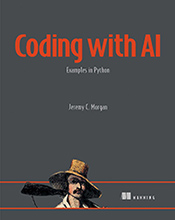
AI Is Changing Software Development. This Is How Pros Use It.
Written for working developers, Coding with AI goes beyond hype to show how AI fits into real production workflows. Learn how to integrate AI into Python projects, avoid hallucinations, refactor safely, generate tests and docs, and reclaim hours of development time—using techniques tested in real-world projects.