
How to cube a number in Python
In this tutorial, we will show you how to cube a number using Python
Cubing a number means raising it to the power of 3. In this tutorial, we will show you how to cube a number using Python programming language.
Method 1: Using the ** Operator
The simplest way to cube a number in Python is to use the ** operator, which raises a number to a power. Here’s an example:
# Using the ** operator
x = 5

result = x ** 3

print(result)
In this code, we define a variable called x with a value of 5. We use the ** operator to raise x to the power of 3. Finally, we print result, which contains the cubed value of x.
Method 2: Using the pow() Function
The pow() function in Python is another way to raise a number to a power. We can use this function to cube a number by passing the number and the power (3) as arguments. Here’s an example:
# Using the pow() function
x = 5

result = pow(x, 3)

print(result)
In this code, we define a variable called x with a value of 5. We use the pow() function to raise x to the power of 3. Finally, we print result, which contains the cubed value of x.
Method 3: Using Math Module
The math module in Python provides a function called pow(), which also raises a number to a power. We can use this function to cube a number. Here’s an example:
# Using the math module
import math

x = 5

result = math.pow(x, 3)

print(result)
In this code, we import the math module, which contains the pow() function. We define a variable called x with a value of 5. We use the pow() function from the math module to raise x to the power of 3. Finally, we print result, which contains the cubed value of x.
Conclusion
In this tutorial, we have shown you three different methods to cube a number in Python. We have covered using the ** operator, the pow() function, and the math module. It’s important to choose the right method that suits your needs and the context in which you’re working.
Keep practicing these methods and try to use them in your own projects. Remember that practice makes perfect, and the more you practice, the better you will get at Python programming. Thank you for reading, and happy coding!
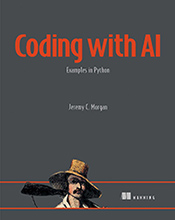
AI Is Changing Software Development. This Is How Pros Use It.
Written for working developers, Coding with AI goes beyond hype to show how AI fits into real production workflows. Learn how to integrate AI into Python projects, avoid hallucinations, refactor safely, generate tests and docs, and reclaim hours of development time—using techniques tested in real-world projects.